Kitchen Cabinets
Refinish, Reface, or Replace: What to Do With Old Kitchen Cabinets
Cabinets are the biggest thing in your kitchen, and usually the biggest line in the budget. They are also the part most likely to be replaced when they didn't need to be. There are three ways to deal with tired cabinets, and the right one comes down to a single question: what shape are the boxes in?
The Three Options in Plain Terms
| Option | What changes | What stays | Best when |
|---|---|---|---|
| Refinish | Color and finish, hardware | Doors, boxes, layout, countertops | Solid cabinets in a style you still like |
| Reface | Doors, drawer fronts, visible surfaces, hardware | Boxes, layout, countertops | Good boxes, dated door style |
| Replace | Everything, including layout if you want | Nothing | Damaged boxes or a layout that doesn't work |
Refinishing: New Color, Same Cabinets
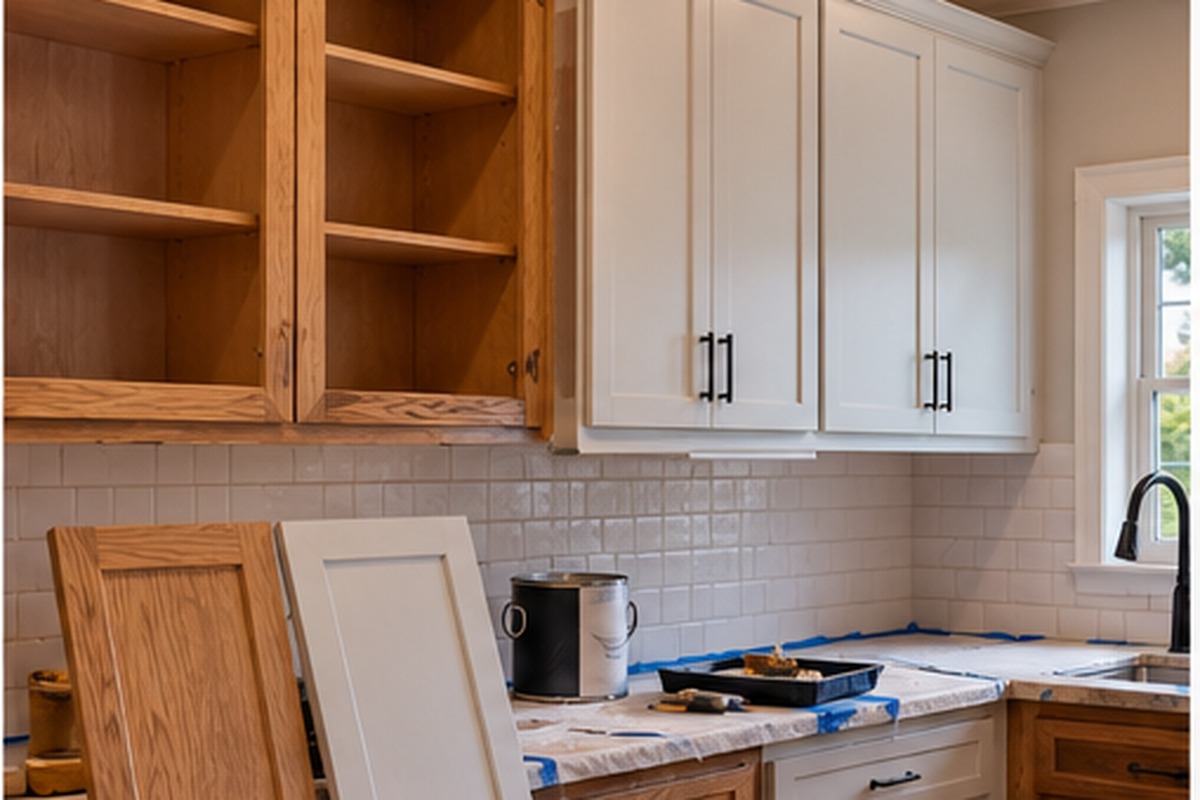
Refinishing keeps every door and box you have. We clean and degrease them, repair dings, sand, prime, and apply a hard-wearing paint or stain. Add new hardware and soft-close hinges and the kitchen can look very different for the least money and the least disruption.
It is the right choice when the doors are solid wood or good-quality MDF, the style still suits you, and what bothers you is the color or a worn finish. It is the wrong choice when the doors are peeling thermofoil or swollen from water, because paint doesn't fix either.
Refacing: New Doors on Good Bones
Refacing keeps the cabinet boxes and replaces what you see. You get new doors and drawer fronts in whatever style you want, a matching veneer over the face frames and exposed sides, and new hinges and hardware.
The big advantage is that your countertops stay exactly where they are. If you have stone tops you love, refacing changes the look of the kitchen without touching them. The limit is the layout: every cabinet stays where it is, at the size it is.
Replacing: A Clean Slate
Replacement means new boxes throughout. It costs the most and takes the longest, mainly because of the wait for the cabinets to arrive. It is also the only option that lets you move things: add an island, build in a pantry, fix the corner that has never worked.
Replacing is money well spent when the boxes themselves have failed. Look for sagging shelves, water damage under the sink, particleboard that is crumbling at the screw holes, or drawers that have pulled apart.
Five Checks You Can Do Tonight
- Open the sink cabinet. Swollen or soft wood on the floor of the box means water damage.
- Press on the shelves. If they bow under your hand, the material is giving out.
- Pull a drawer all the way out. Look at how the corners are joined and whether the box is solid wood or stapled particleboard.
- Check the hinge screws. Screws that spin without tightening mean the box material is stripped.
- Ask whether the layout works. If you would move the stove or the sink given the chance, new finishes won't make you happy.
If the boxes pass and the layout works, refinish or reface. If either fails, replace.
A Note on Older Tulsa Homes
Plenty of Tulsa homes from the 1950s through the 1970s have cabinets that were built in place from solid wood. Those boxes are often sturdier than much of what is sold today, and they are good candidates for refinishing or refacing. It is worth having someone look before you assume they have to go.
What About the Countertops?
This is the detail that changes the math. New boxes mean the countertops have to come off, and stone rarely survives removal in one piece. So replacing cabinets usually means new countertops too. Refinishing and refacing leave them alone.
How We Help You Decide
When we look at your kitchen cabinets, we start with the boxes and tell you what is worth keeping, even when that is the cheaper answer. If the project grows into layout changes, new counters, and flooring, it becomes a full kitchen remodel, and we will tell you that up front too.